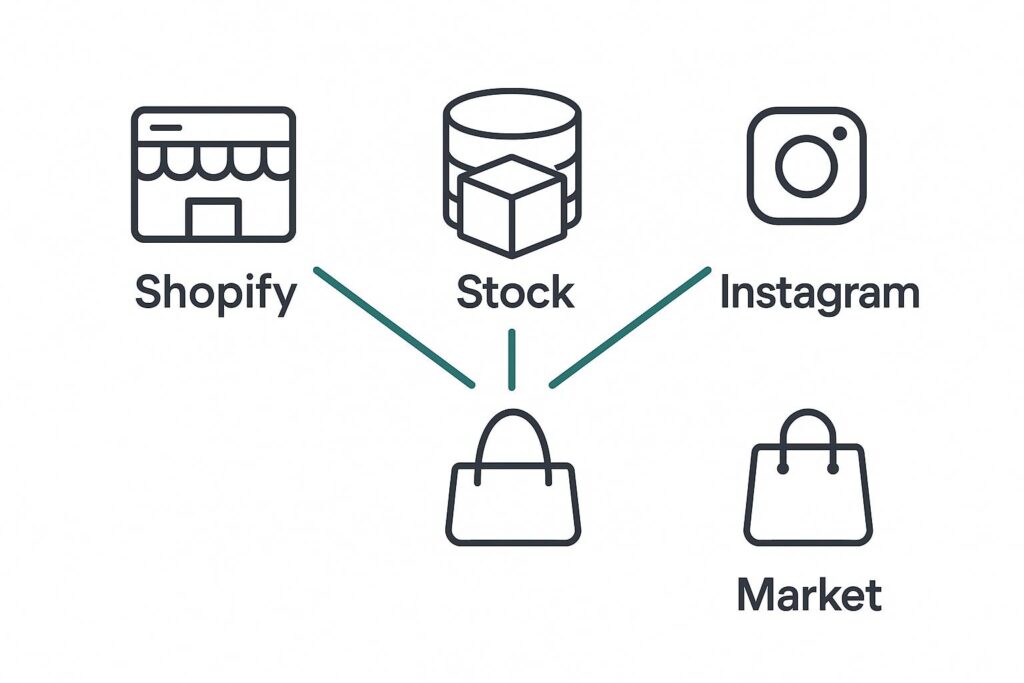
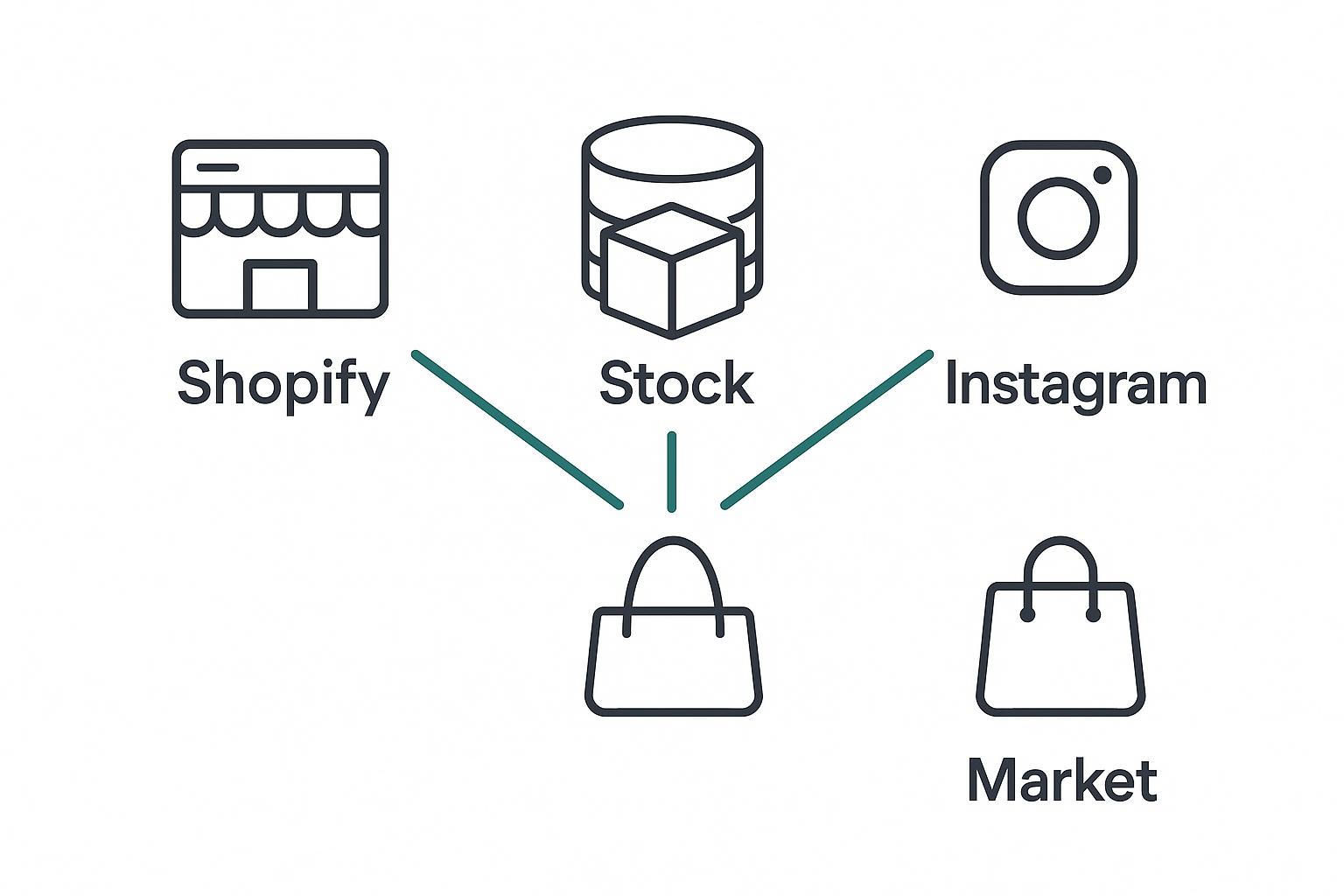
Most growing Pakistani brands do not sell on Shopify alone. There is the Shopify store, an Instagram shop, maybe a marketplace listing, and a physical counter. Each one sells the same stock — and if they do not share a single, live count, you oversell. Keeping Shopify stock accurate across every channel is what lets you sell everywhere without cancelling orders. This guide explains how multi-channel stock sync works and how to get it right.
The multi-channel overselling trap
Picture one popular variant with three units left. It is listed on your Shopify store and your Instagram shop. Two customers buy on Instagram within the hour, but your Shopify count still shows three. A third customer buys on Shopify — and now you have sold four units of a product you had three of. Multiply that across your catalogue and busy days, and multi-channel overselling becomes a daily source of cancelled orders and frustrated customers. The cause is simple: each channel is keeping its own separate count.
One source of truth
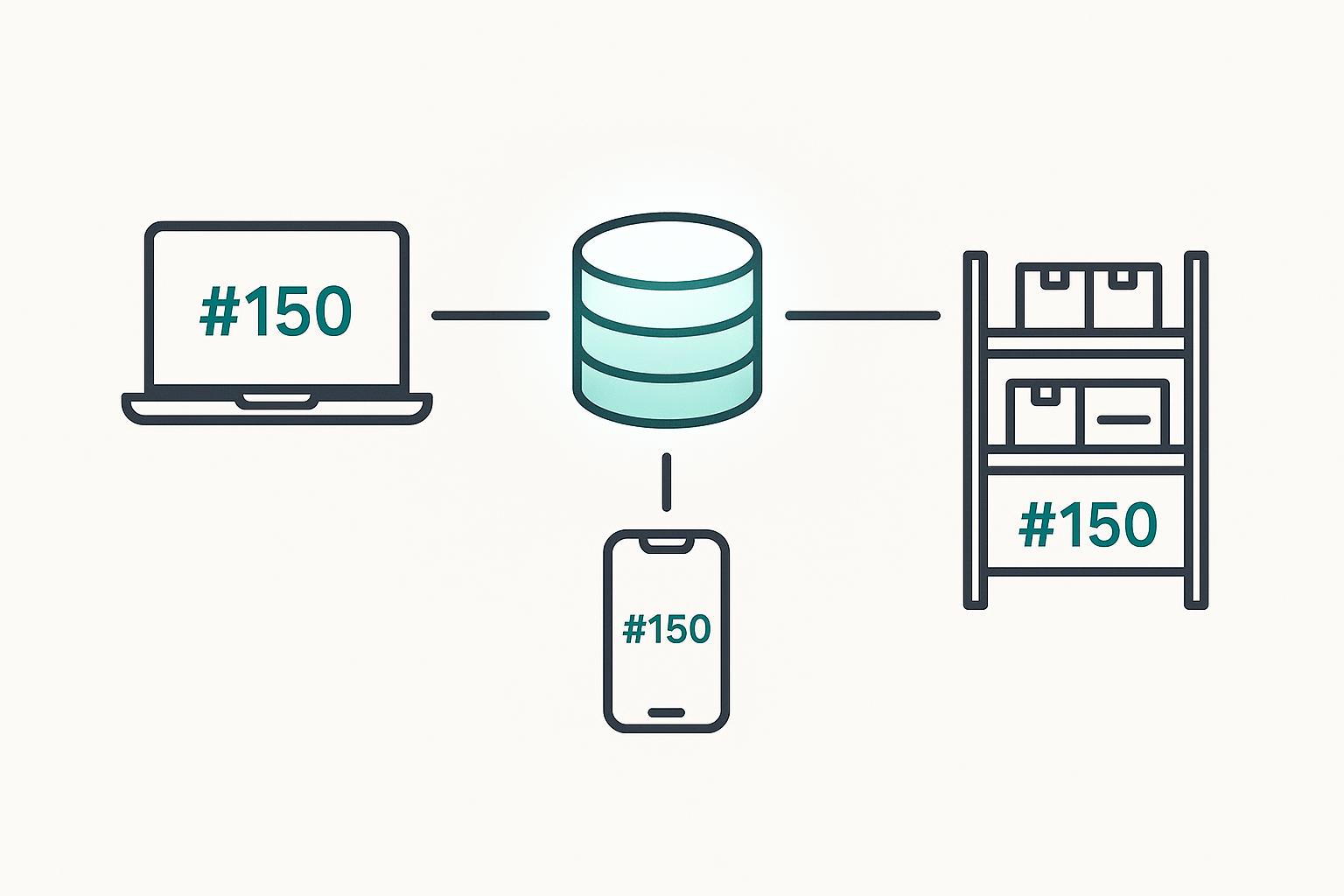
The fix is to make one system the single source of truth for stock, and have every channel draw from it. When a sale happens anywhere, that central count drops by one, and the new number is pushed back out to all channels. No channel keeps its own separate tally. With a central inventory system feeding Shopify and your other channels, a unit sold on Instagram immediately becomes unavailable on Shopify, and vice versa.
Why real-time beats batch
How fast the count updates matters as much as whether it syncs at all. Many basic setups sync on a schedule — every few hours, or overnight. On a high-traffic Pakistani store, a lot can sell in a few hours, so batch syncing always leaves a window where channels disagree and overselling slips through. Real-time sync — updating within seconds of every sale and return — closes that window. This is the same principle behind preventing overselling on a single channel; we cover it in our guide to stopping overselling on Shopify.
Setting it up
- Choose your central system. Pick the inventory tool that will hold the true count — ideally one built for COD with real-time Shopify sync.
- Connect Shopify. Link your store so stock flows both ways in real time.
- Connect other channels. Bring Instagram, any marketplace, and your POS into the same count, so all of them read and write to the central source.
- Map locations. If you have multiple warehouses, ensure each channel pulls from the right one.
- Test with a live sale. Sell one unit on one channel and confirm the count drops everywhere within seconds.
For the full operational backbone, see our complete inventory guide for Shopify COD stores in Pakistan.
Sell everywhere from one count
ScaleOps Inventory keeps Shopify and your other channels in real-time sync from a single source of truth. Start a free trial.
Get a Free Trial →Frequently asked questions
How do I keep Shopify stock accurate across multiple channels?
Make one inventory system the single source of truth and have every channel — Shopify, Instagram, marketplaces, POS — read and write to it in real time. When a sale happens anywhere, the central count drops and the new number is pushed to all channels within seconds, so no channel keeps a separate tally that causes overselling.
Why do I oversell when selling on Shopify and Instagram together?
Because each channel is tracking stock separately. A sale on Instagram does not reduce the Shopify count unless they share a live source of truth, so both can sell the same last units. Connecting every channel to one central, real-time inventory count prevents this.
Is real-time sync necessary, or is hourly enough?
For a busy store, real-time is necessary. A lot can sell in an hour, so batch or hourly syncing leaves a window where channels disagree and overselling happens. Real-time sync updates within seconds of every sale and return, closing that window entirely.
Does multi-channel sync work with multiple warehouses?
Yes. A good system tracks stock per location and ensures each channel pulls from the correct warehouse, so multi-channel and multi-warehouse work together. A sale reduces the central count and reflects the right location, keeping every channel and warehouse accurate.
What is a single source of truth for inventory?
It is one system that holds the authoritative stock count, which every sales channel and warehouse reads from and writes to. Instead of separate counts that drift apart, there is one number everyone trusts, kept current in real time. This is the foundation of accurate multi-channel selling.
