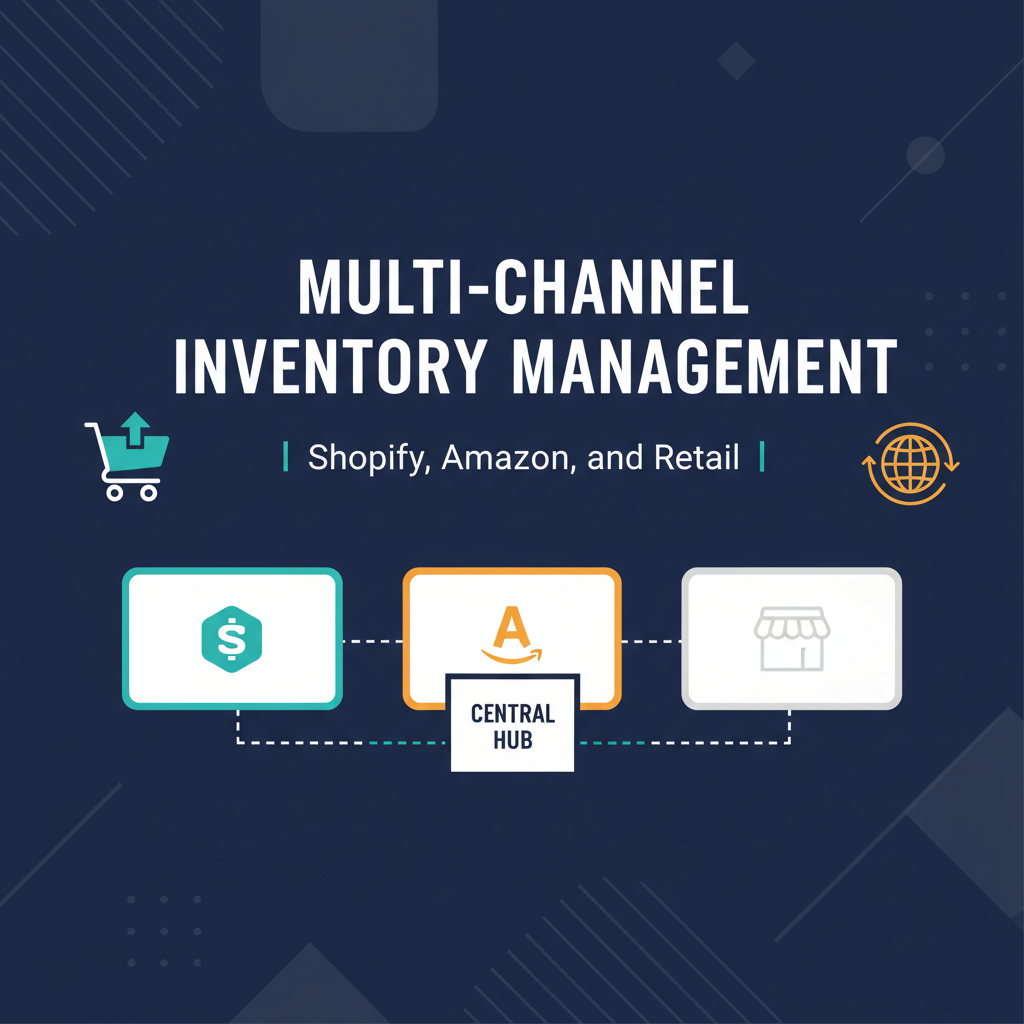
When a brand sells on Shopify, Amazon, and in physical retail simultaneously, inventory management becomes the most complex operational challenge they face. Overselling on one channel, sitting on dead stock in another, and keeping product data synchronized across three or more systems – this is where many multi-channel brands break down. In our experience, the brands that do this well have built a centralized inventory system that treats all channels as demand sources and manages supply from a single point of truth.
The Core Challenge: Real-Time Synchronization
Each channel has its own inventory record. When a unit sells on Amazon, Shopify does not know unless you tell it. Without synchronization, overselling is inevitable. The solution is a centralized IMS or OMS that holds the master inventory count, pushes real-time availability to each channel when a sale occurs anywhere, and applies channel-specific allocation rules.
Tool Options for Multi-Channel Inventory
Shopify Markets and POS
If your channels are Shopify DTC plus your own physical retail locations (not Amazon), Shopify’s native multi-location inventory handles synchronization between locations automatically. Shopify POS integrates seamlessly. This does not handle Amazon or third-party marketplaces.
Linnworks
Linnworks is one of the most widely used multi-channel inventory platforms for mid-market e-commerce. It connects Shopify, Amazon, eBay, and retail POS systems with real-time stock synchronization, automated order routing, and warehouse management features. Suitable for brands with 500+ SKUs across 3+ channels.
Zoho Inventory
Zoho Inventory supports multi-channel selling across Shopify, Amazon, eBay, and Etsy with real-time stock sync. It integrates natively with Zoho Books for accounting and Zoho CRM for customer data. Strong choice for brands already in the Zoho ecosystem wanting a unified platform rather than point solutions.
ChannelAdvisor / CommerceHub
For enterprise-scale multi-channel operations (10+ channels, large SKU catalogs), ChannelAdvisor provides automated listing management, demand forecasting, and feed management at a level that smaller tools cannot match. Pricing is enterprise-tier.
Channel-Specific Inventory Allocation
Not all channels should draw from the same available pool without rules. Common allocation strategies:
- Reserve buffers: Keep X units reserved for FBA restocking before publishing remaining stock to Shopify, to avoid FBA stockouts which hurt Amazon ranking
- Priority channels: Your DTC Shopify store typically has higher margin – consider reserving a percentage of limited stock for it over lower-margin marketplace channels
- Dead stock liquidation: Route aging inventory to clearance channels (eBay, liquidation marketplaces) without exposing it on your DTC store
Product Data Synchronization
Multi-channel inventory management is not just about quantities – it is also about keeping product data (titles, descriptions, prices, images) consistent across channels. Each channel has its own format requirements. A Product Information Management (PIM) system – or a well-maintained master product spreadsheet for smaller catalogs – is the source of truth for product data that feeds all channels. Without it, product data drifts and creates compliance issues on Amazon (suppressed listings, policy violations) and brand inconsistency on DTC.
Amazon FBA vs FBM in a Multi-Channel Context
Brands selling on Amazon face a decision: Fulfilled by Amazon (FBA) or Fulfilled by Merchant (FBM). In a multi-channel context:
- FBA: Amazon holds your stock in their warehouses. You cannot use that inventory to fulfill Shopify orders (unless you use Amazon Multi-Channel Fulfillment, which ships in Amazon-branded packaging). Stock is locked to Amazon.
- FBM: You ship from your own warehouse. Inventory is shared and flexible across channels, but you lose the Prime badge advantage on Amazon listings.
- Hybrid: Many brands maintain FBA stock for their core Amazon SKUs while keeping a separate pool for Shopify and retail fulfillment from their own warehouse.
Frequently Asked Questions
What is the best multi-channel inventory management tool for Shopify and Amazon?
Linnworks is widely used for mid-market brands with 500+ SKUs across 3+ channels. Zoho Inventory is strong for brands in the Zoho ecosystem. For early-stage brands with fewer SKUs, Shopify native tools plus manual Amazon sync may be sufficient before investing in a dedicated IMS.
How do I prevent overselling across multiple channels?
A centralized inventory management system that pushes real-time availability updates to all channels when a sale occurs anywhere is the only reliable solution. Manual channel-by-channel updates will always have lag that creates oversell risk at any meaningful volume.
Can I use Amazon FBA stock to fulfill Shopify orders?
Yes, through Amazon Multi-Channel Fulfillment (MCF). The limitation is that orders ship in Amazon-branded packaging. Many brands use MCF for B2B orders but maintain separate stock for DTC fulfillment to preserve brand experience.
What is a PIM system and do I need one?
A PIM (Product Information Management) system is a central repository for all product data across channels. For brands with 100+ SKUs across 3+ channels, a PIM prevents data drift and listing compliance issues. For smaller catalogs, a well-maintained master spreadsheet can serve the same function.
Need help designing a multi-channel inventory architecture? Contact OpsStack Consulting – we help e-commerce brands build the systems infrastructure to sell across channels without operational chaos.
Keep reading
- How to Sync Shopify Inventory Across Multiple Channels (2026)
- How to Integrate Amazon and Shopify: Sync Inventory, Orders, and Listings
- How to Manage Shopify Apps Without Slowing Down Your Store
- Shopify Order Management: Why It Breaks at Scale (And How to Fix It)
Need hands-on help? Explore our Shopify Operations →
