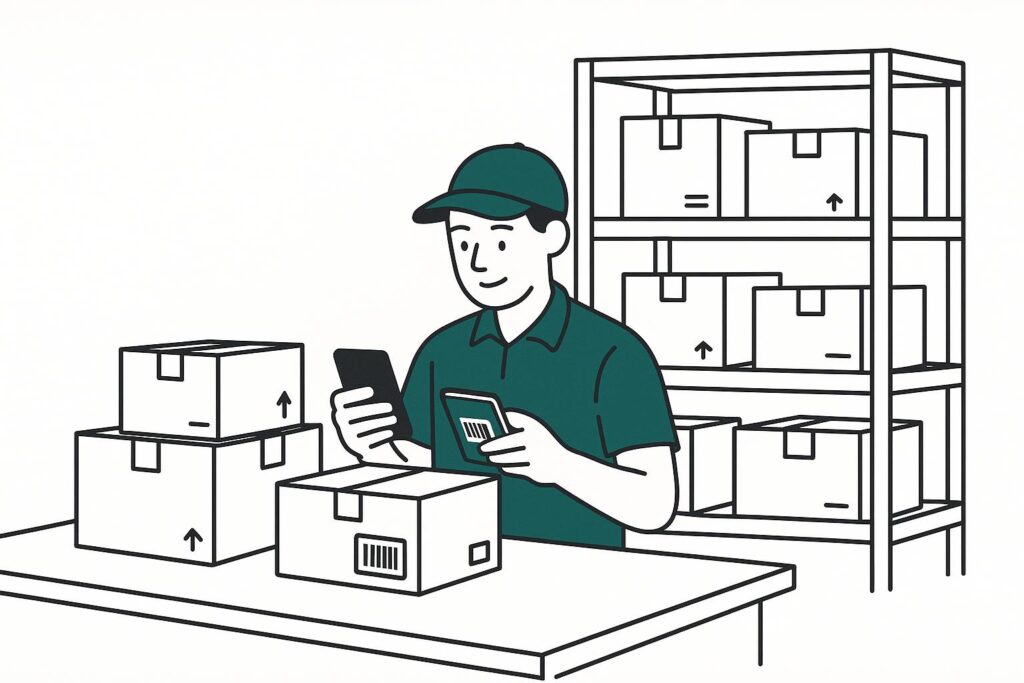
For a Shopify store in Pakistan, COD returns are not an edge case — they are a daily flood. When 25–45% of cash-on-delivery orders come back, every returned parcel is a unit of stock that left your shelf, travelled with a courier, and now needs to find its way home. Handle that badly and you slowly lose stock, oversell what you think you have, and watch cash quietly leak out of the business. This guide shows you exactly how to handle COD returns in Pakistan without losing stock — the process, the tools, and the habits that keep your counts honest.
The journey of a returned COD parcel
To stop losing stock to returns, you first have to see the full path a refused parcel takes. It is longer than most owners think.
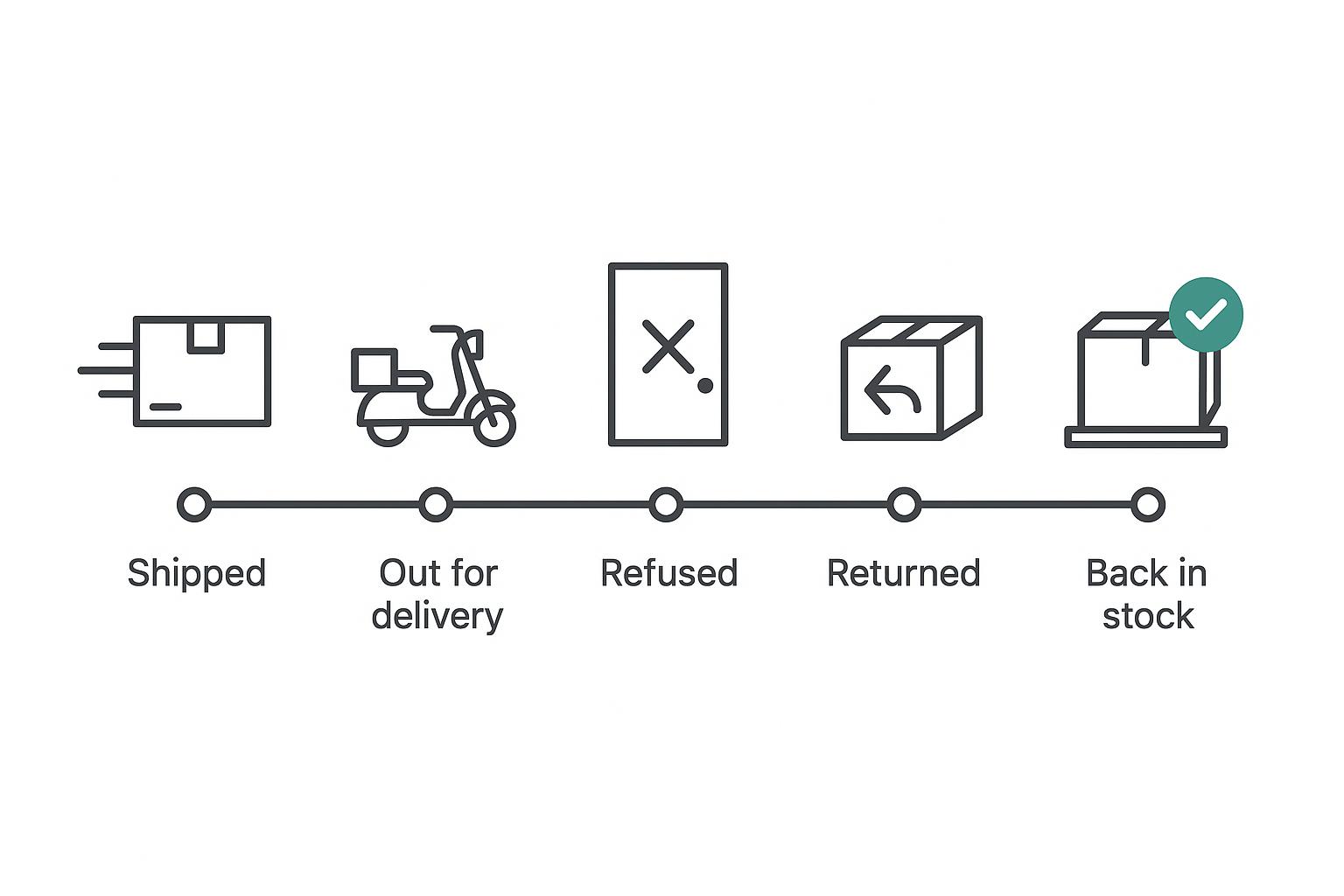
A unit is shipped, goes out for delivery, gets refused at the door, travels back to you, and — if everything goes right — ends up back in available stock. The problem is the gap between “returned” and “back in stock.” That last step is manual, easy to skip on a busy day, and the exact point where units vanish from your counts. Couriers like TCS, Leopards, and M&P will get the parcel back to you; what happens next is on you.
Where stock actually leaks
Returned stock disappears in three common ways:
- Never counted back in. The parcel arrives, gets tossed on a pile, and nobody updates the system. Your real stock is higher than Shopify shows, so you stop selling something you actually have.
- Counted back, but wrong. Someone updates a spreadsheet from memory and adds the unit to the wrong variant or location. Now two numbers are wrong instead of one.
- Mixed with damaged goods. A returned unit that is actually damaged gets put back into sellable stock, and ships again — straight into a second return.
All three come from the same root cause: no reliable, fast way to identify a returned unit and put it back in the right place. That is a tracking problem, and it has a clean solution.
The scan-back process, step by step
The reliable way to handle returns is a barcode scan-back — a two-tap habit your team does for every returned parcel:
- Receive the return. When the courier drops back refused parcels, bring them to one receiving point, not scattered across the warehouse.
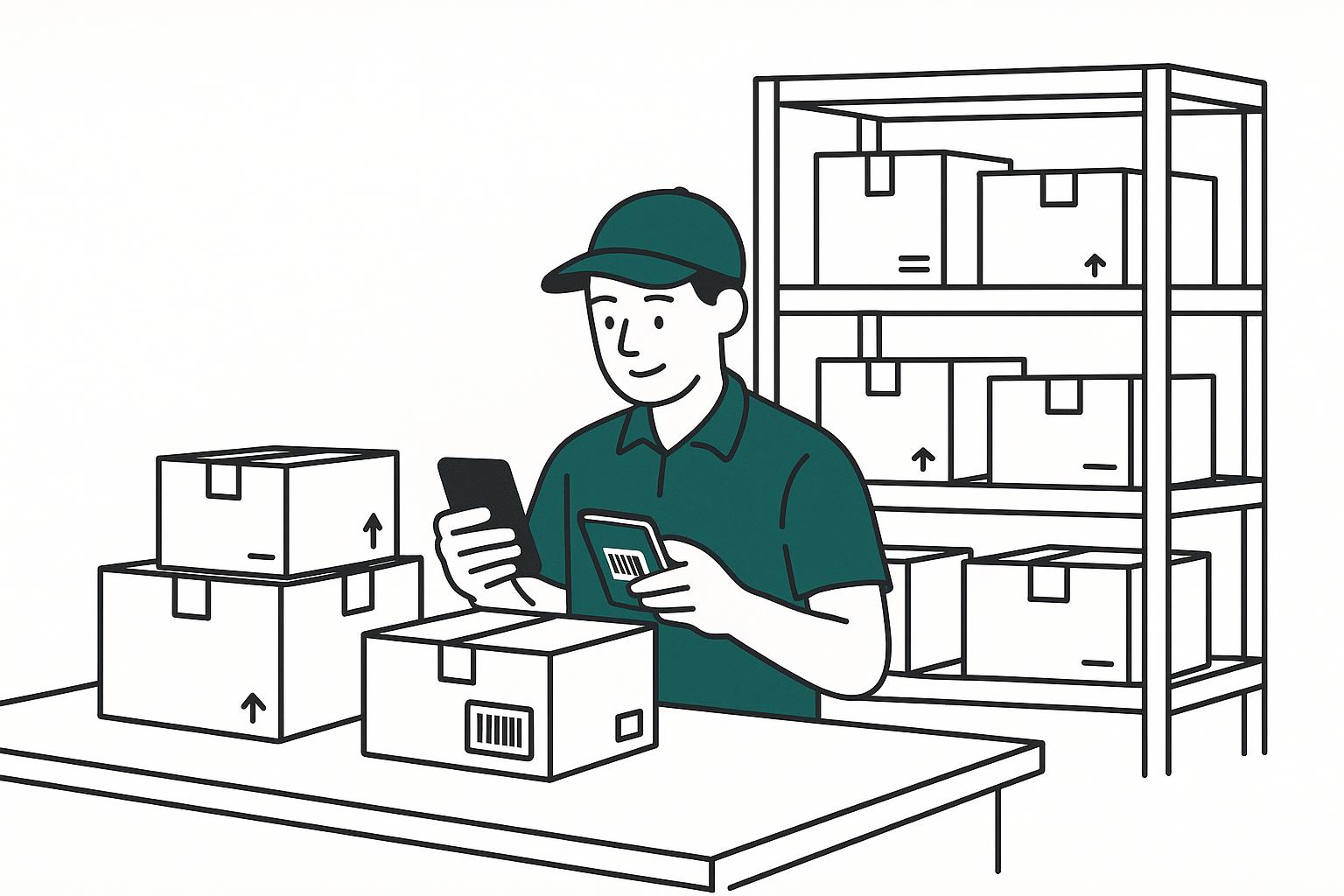
- Scan the barcode. Each unit carries a barcode. A staff member scans it with a phone — the system instantly knows the exact product, variant, and history.
- Inspect and decide. Confirm the unit is sellable. If yes, tap “return to stock.” If damaged, route it to a separate damaged location instead.
- Stock and Shopify update automatically. The unit is back in available inventory with a logged movement, and your Shopify count goes back up within seconds.
This is the core of how ScaleOps Inventory handles returns, and it is the single highest-leverage process change a Pakistani COD store can make. For the bigger picture of how it fits your whole operation, see the complete inventory management guide for Shopify Pakistan.
Checking returns for re-sale
Not every returned unit is fit to ship again. Build a 10-second check into the scan-back: is the packaging intact, is the product unworn and undamaged, are all tags and accessories present? Sellable units go back to available stock; anything questionable goes to a separate “damaged” or “review” location so it never accidentally re-ships. This one habit prevents the costly loop of a damaged unit going out, coming back, and going out again.
How to reduce your return rate
Handling returns well keeps your stock honest. Reducing returns in the first place protects your margin. A few proven moves for Pakistani COD stores:
- Confirm orders before dispatch. A quick WhatsApp or call confirmation filters out fake and impulse orders that would otherwise be refused.
- Set clear delivery expectations. Accurate timelines and proactive updates reduce “I changed my mind” refusals.
- Flag repeat refusers. Track customers and numbers with a history of refusing COD, and require advance payment for high-risk orders.
- Tighten product info. Clear sizing, real photos, and honest descriptions cut “not what I expected” returns — especially in footwear and apparel.
Turn returns back into sellable stock
ScaleOps Inventory scans every COD return straight back into stock and updates Shopify in seconds. Start a free trial and stop losing units to returns.
Get a Free Trial →Frequently asked questions
Why are COD return rates so high in Pakistan?
Cash on delivery removes the commitment of upfront payment, so impulse orders, fake orders, and “changed my mind” refusals are common. Return rates of 25–45% are normal for COD fashion and footwear. Because no money changes hands until delivery, customers can refuse at the door with no cost to themselves, which is why confirmation calls and tracking repeat refusers matter.
How do I put a returned COD order back into stock correctly?
Bring returns to one receiving point, scan each unit’s barcode to identify it exactly, inspect it for damage, then mark sellable units back to available stock. With barcode-based software the Shopify count updates automatically within seconds, so you never lose track of a returned unit or add it to the wrong variant.
Should returned stock be inspected before re-selling?
Yes. Build a quick check into your return process: packaging intact, product unworn, tags and accessories present. Sellable units go back to stock; damaged or questionable units go to a separate location so they never accidentally re-ship and trigger a second return.
Can software automatically update Shopify when a return comes back?
Yes. Inventory tools built for COD, like ScaleOps Inventory, update your Shopify stock count within seconds of a returned unit being scanned back in, writing to the correct warehouse location. This prevents the gap where returned stock exists physically but not in your store.
How can I lower my COD return rate?
Confirm orders before dispatch with a WhatsApp or call, set clear delivery expectations, flag and require prepayment from repeat refusers, and tighten product information so customers know exactly what they are getting. These steps reduce both fake orders and “not what I expected” refusals.
