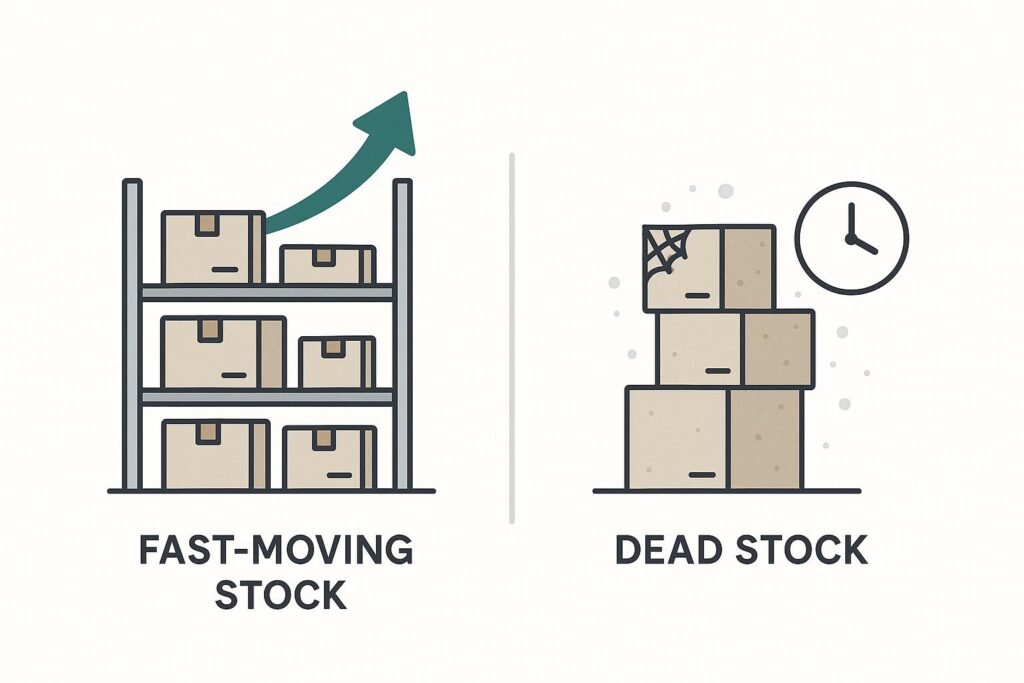
Every rupee tied up in stock that will not sell is a rupee you cannot spend on stock that will. For Pakistani apparel and footwear brands — where styles, sizes, and seasons move fast — dead stock is one of the quietest killers of cash flow. This guide explains how to spot dead stock early, clear what you already have, and stop it building up in the first place.
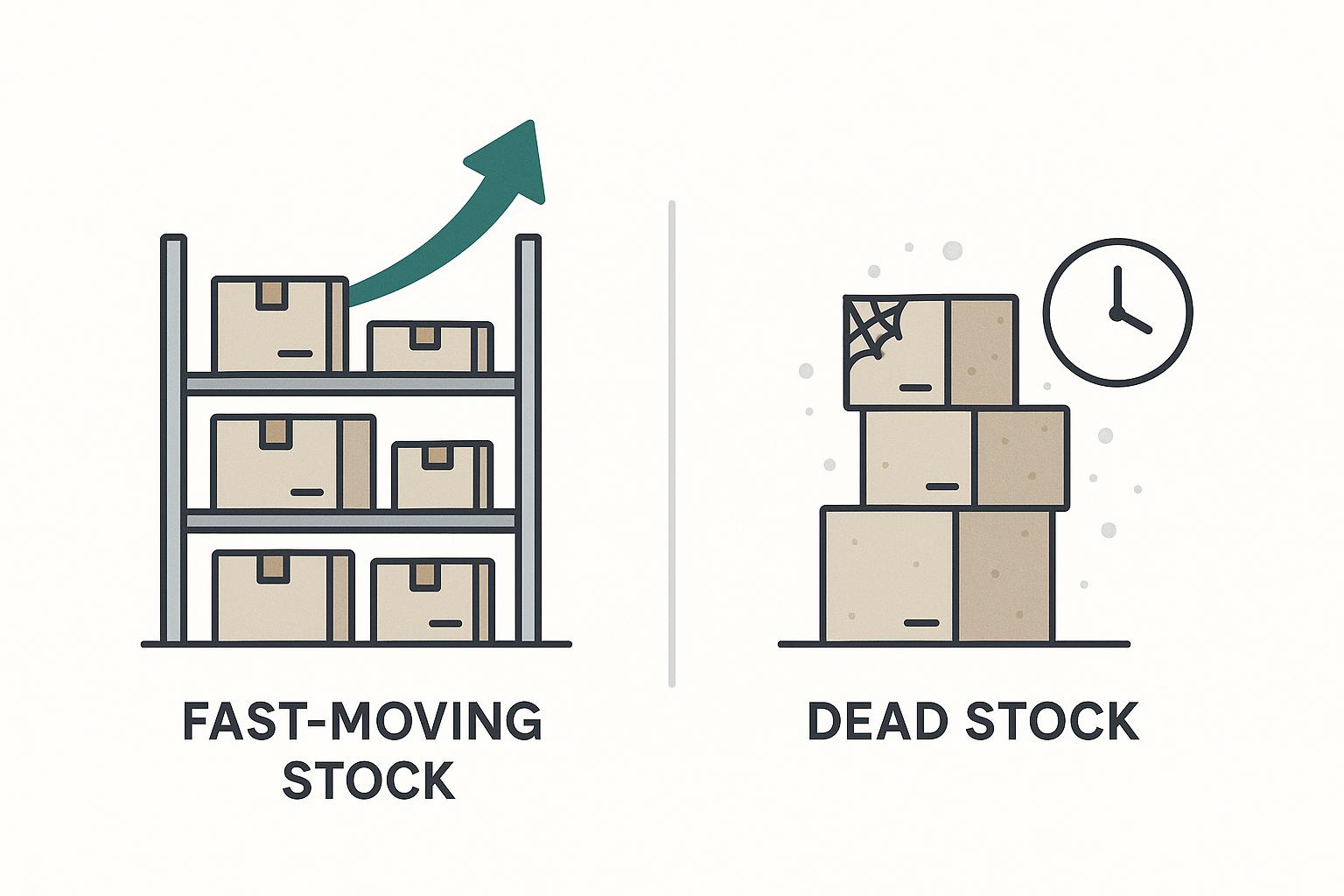
What dead stock really costs
Dead stock is inventory that has stopped selling — last season’s design, an odd size, a colour that never caught on. It costs you three ways at once: the cash it tied up when you bought it, the space it occupies that a fast mover could use, and the eventual markdown when you finally clear it. For apparel and footwear especially, value drops the longer stock sits, because fashion ages. The goal is not to never have dead stock — it is to catch it early, while it is still worth something.
How to spot it early
You cannot fix what you cannot see. Spotting dead stock early depends on knowing how fast each item actually moves:
- Track sell-through per SKU. Watch how quickly each variant sells relative to how much you hold. Slow sell-through is the early warning.
- Flag ageing stock. Know how long each unit has been sitting. Per-unit tracking makes this precise — you can see the exact age of stock on the shelf.
- Review by category and size. Dead stock often hides in specific sizes or colours while the style overall looks healthy.
Accurate inventory data is what makes early detection possible — which is one more reason spreadsheets fall short, as we cover in Excel vs inventory software.
How to clear it
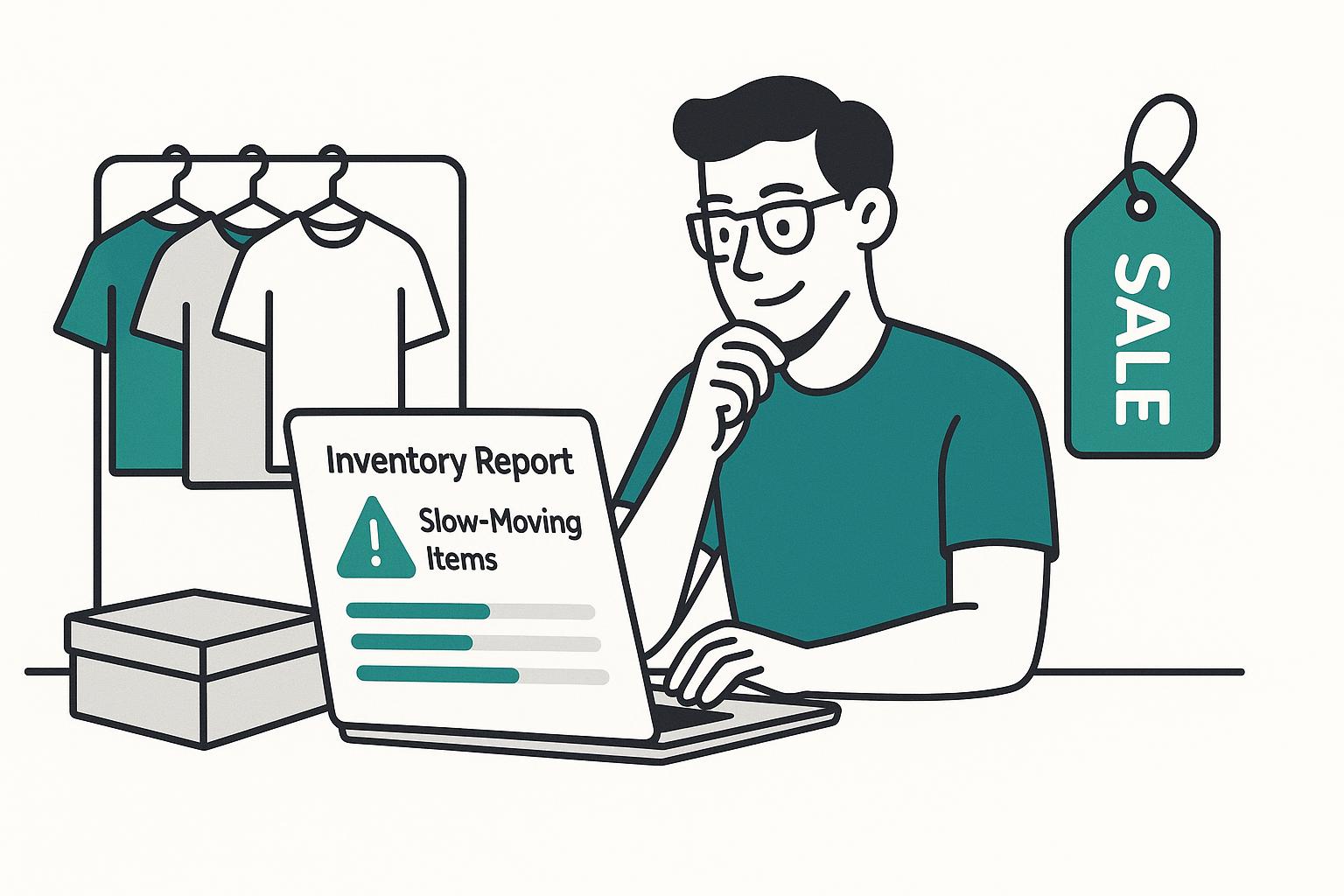
Once you have identified slow movers, act before they lose more value:
- Discount decisively. A clear sale or markdown moves stock and frees cash. A unit sold at a discount beats a unit gathering dust.
- Bundle slow with fast. Pair a slow mover with a popular item as a bundle to shift it without a deep discount.
- Use it as a free-gift threshold. “Free [slow item] on orders over X” clears stock while raising average order value.
- Liquidate the truly stuck. For stock that simply will not move, sell it in bulk to a wholesaler or outlet to recover cash and space.
How to prevent it building up
Prevention beats clearance. A few habits keep dead stock from accumulating:
- Buy to demand, not optimism. Use real sell-through data to decide reorder quantities, especially per size.
- Order tighter on new styles. Test new designs with smaller runs, then reorder what sells.
- Watch your sizes. In footwear and apparel, order depth by size based on actual demand, not an even spread.
- Review regularly. A monthly look at slow movers catches problems while the stock is still fresh.
All of this rests on trustworthy inventory data. For the full system, see our complete inventory guide for Shopify COD stores in Pakistan.
See your slow movers before they go dead
ScaleOps Inventory tracks every unit’s age and sell-through so you spot dead stock early. Start a free trial.
Get a Free Trial →Frequently asked questions
What is dead stock in e-commerce?
Dead stock is inventory that has stopped selling — last season’s designs, unpopular colours, or odd sizes that sit unsold. It ties up the cash you spent buying it, occupies space a fast mover could use, and usually has to be cleared later at a markdown. For apparel and footwear it loses value the longer it sits because fashion ages.
How do I identify dead stock early?
Track sell-through per SKU to spot slow movers, flag how long each unit has been sitting (per-unit tracking shows exact stock age), and review by category and size since dead stock often hides in specific sizes or colours. Accurate, current inventory data is what makes early detection possible.
How can I clear dead stock quickly?
Discount decisively with a clear sale, bundle slow movers with popular items, use slow stock as a free-gift threshold to raise average order value, and liquidate truly stuck stock in bulk to a wholesaler or outlet. Acting early recovers more value than waiting, because fashion stock keeps losing value.
How do I stop dead stock from building up?
Buy to real demand rather than optimism, test new styles with smaller runs and reorder what sells, order depth by size based on actual demand instead of an even spread, and review slow movers monthly. These habits, backed by trustworthy inventory data, keep dead stock from accumulating.
Why is dead stock a bigger problem for apparel and footwear?
Because these categories are seasonal and size-driven. Styles go out of fashion, and demand varies sharply by size and colour, so it is easy to end up holding the wrong variants. Value also falls faster as items age, making early detection and quick clearance especially important.
