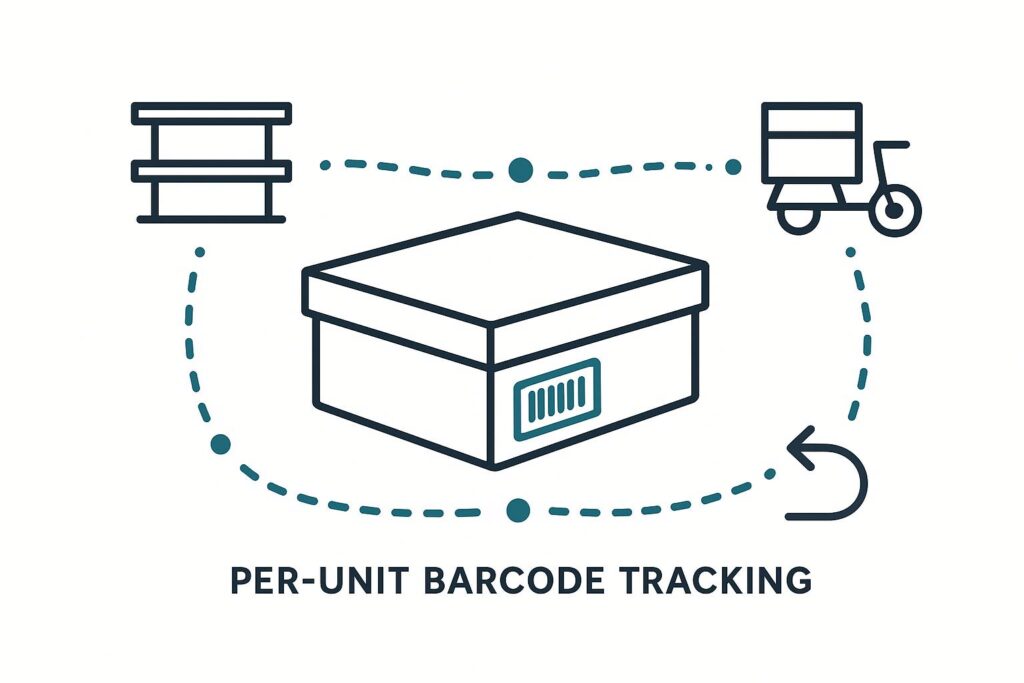
If your store sells footwear, apparel, or leather goods on cash on delivery, a plain stock number is not enough. You need to know not just how many units you have, but which units, where they are, and what they have been through. That is what a barcode inventory system gives a Pakistani e-commerce store — and why per-unit tracking beats simple SKU counting for high-return COD businesses. This guide explains what a barcode system is, why per-unit tracking wins, and how to set one up affordably.
What a barcode inventory system is
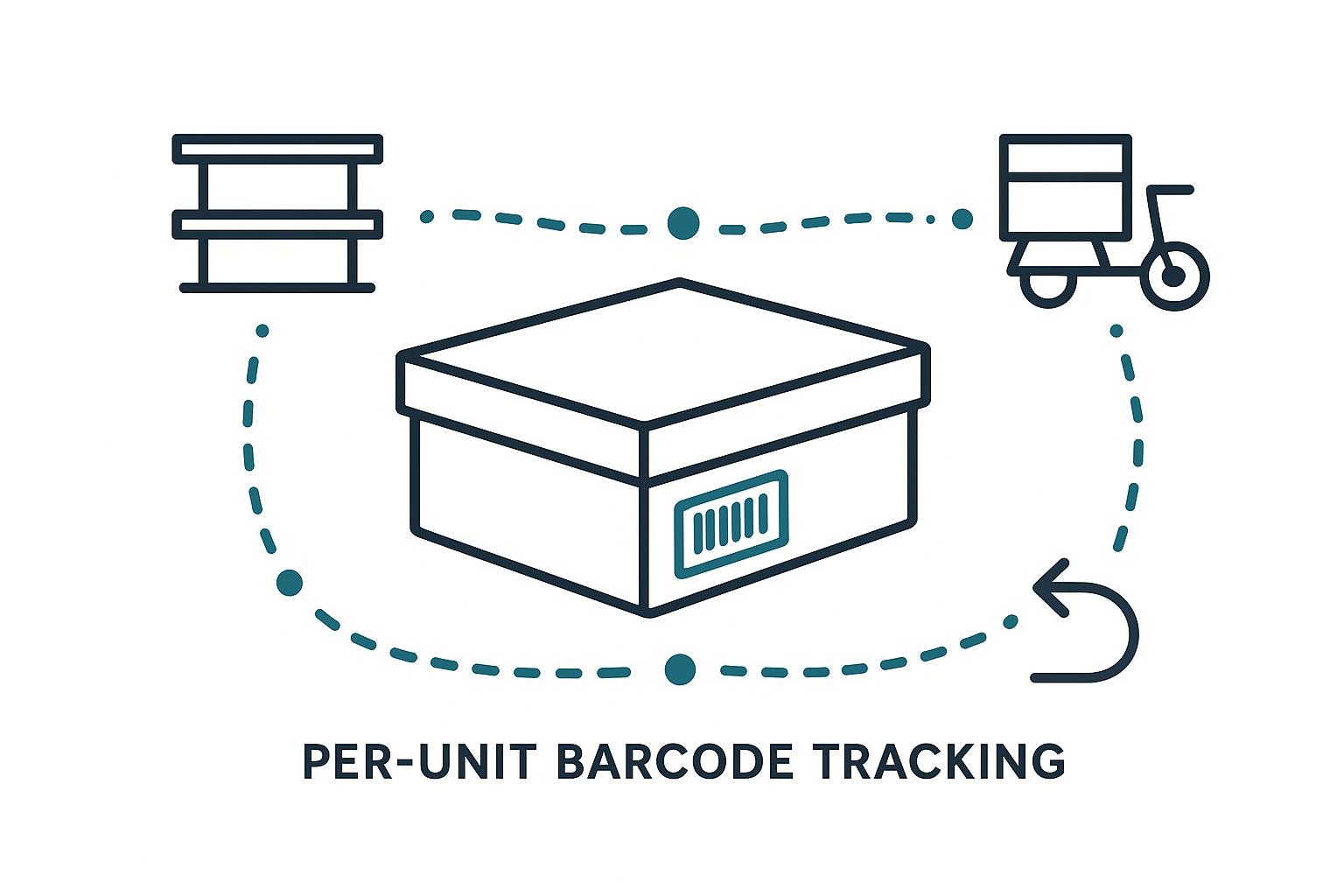
A barcode inventory system gives every item a scannable code, so instead of counting and typing numbers by hand, your team scans. Each scan records a precise event — received, moved, sold, returned — with no manual data entry and no guesswork. The scanner can be a dedicated device, but for most Pakistani stores it is simply a smartphone camera. The result is stock data that is fast to capture and far more accurate than a spreadsheet.
Per-unit vs SKU-level tracking
This is the distinction that matters most. A SKU-level system tracks a type of product: “Black Sneakers — Size 9: 12 units.” A per-unit system gives every individual sneaker its own barcode and history, so you can scan one specific item and know it is the one that shipped to Karachi last week, was refused, and came back yesterday.
For a plain prepaid store, SKU-level is often enough. For a Pakistani COD store drowning in returns, per-unit tracking is the difference between a stock count you trust and one you constantly doubt. When a returned parcel arrives, per-unit tracking lets you scan it and instantly, correctly, put that exact item back where it belongs. This is the model ScaleOps Inventory is built on.
Why it wins for COD stores
Three reasons per-unit barcode tracking is a fit for Pakistani COD e-commerce:
- Returns become clean. Scan a refused parcel and the system knows exactly what it is — no guessing, no wrong-variant errors.
- Counts stay trustworthy. Every movement is logged against a specific unit, so your numbers and your shelves agree.
- Accountability is built in. Every scan is signed with a user and timestamp, so you can see who received, moved, or shipped any unit — useful when stock goes missing.
For high-value categories like leather goods, that traceability also protects you against shrinkage. For the full operational context, see our complete inventory management guide for Shopify Pakistan.
Setting one up affordably
Setting up a barcode system is cheaper than most owners expect:
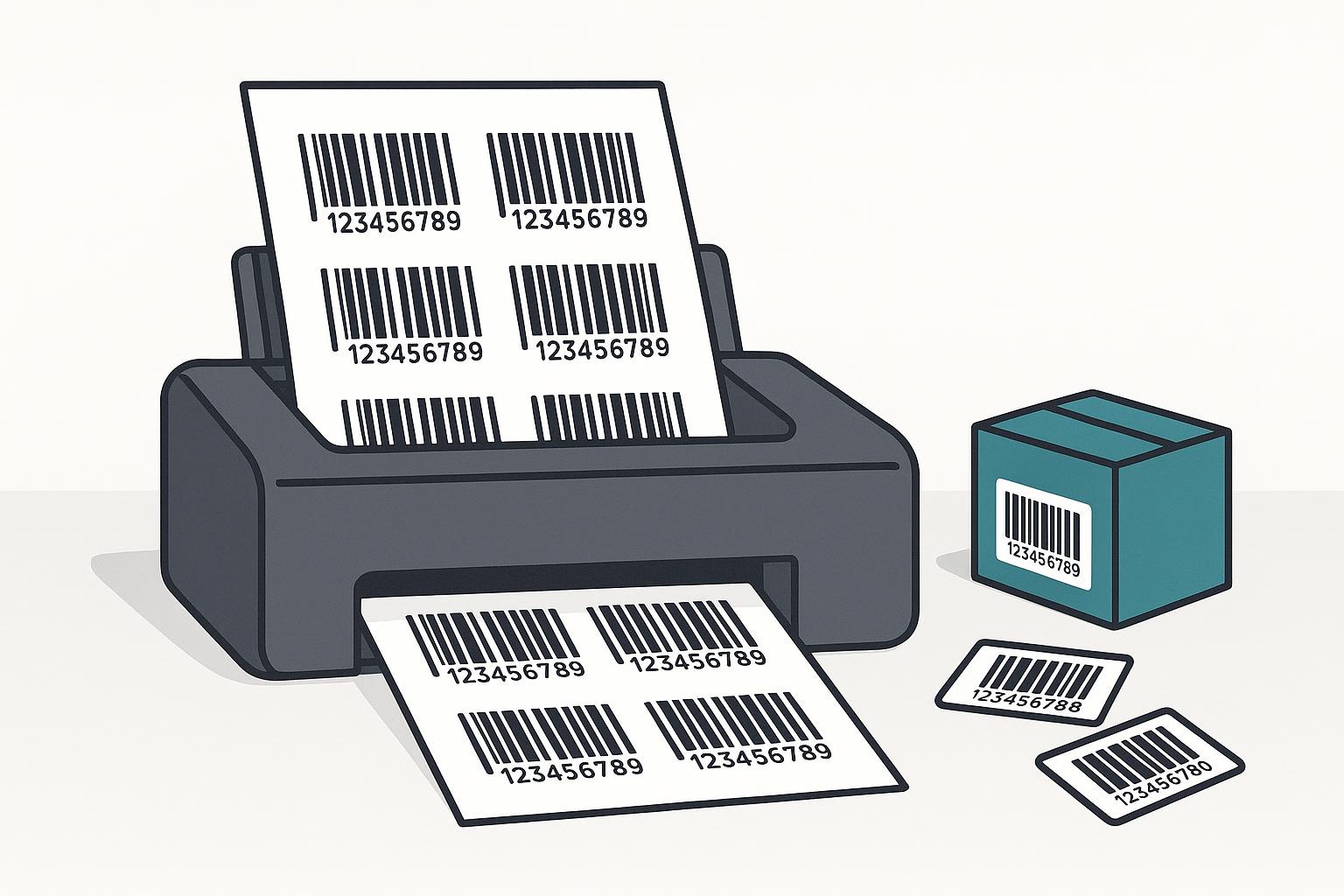
- Import your products. The system generates a unique barcode for each unit automatically — you do not design anything.
- Print labels. A normal A4 printer prints dozens of labels per page. No thermal printer required to start.
- Label your stock. Stick a barcode on each unit as you receive it.
- Scan with a phone. Your team uses their phone camera to receive, move, sell, and return units.
Do you need special hardware?
No. A smartphone camera handles low-to-medium volume comfortably. As you grow, you can add a cheap USB or Bluetooth barcode scanner — it behaves like a keyboard and works in the same software, so high-volume days go faster. The point is that you can start today with the phones your team already carries, and scale hardware only when volume justifies it.
Track every unit, not just a number
ScaleOps Inventory gives every item a barcode and a history, with phone-camera scanning and one-scan COD returns. Start a free trial.
Get a Free Trial →Frequently asked questions
What is a barcode inventory system?
A barcode inventory system gives each item a scannable code so your team records stock events — received, moved, sold, returned — by scanning instead of typing. It removes manual data entry, speeds up warehouse work, and makes counts far more accurate than spreadsheets. For most Pakistani stores the scanner is simply a smartphone camera.
What is the difference between per-unit and SKU-level tracking?
SKU-level tracking counts a type of product as a single number. Per-unit tracking gives each individual item its own barcode and movement history, so you can scan one specific unit and know exactly which item it is and where it has been. For high-return COD categories like footwear and apparel, per-unit tracking keeps counts trustworthy in a way a plain number cannot.
Do I need a barcode scanner or special hardware?
No. A smartphone camera handles low-to-medium volume well. As you grow you can add an inexpensive USB or Bluetooth scanner that works like a keyboard in the same software. You can start with the phones your team already has and add hardware only when volume justifies it.
How do I print barcodes for my products in Pakistan?
The software generates a unique barcode for each unit automatically. You print them on a normal A4 printer, dozens per page, and stick one on each unit as you receive it. A thermal label printer is optional and only worth it at higher volumes.
Is a barcode system worth it for a small Shopify store?
If you run cash on delivery with meaningful return volume, yes. The accuracy it brings to returns and stock counts usually pays for itself quickly by preventing overselling and recovering returned units that would otherwise be lost. For very low-volume prepaid stores, a simple count may suffice for a while.
